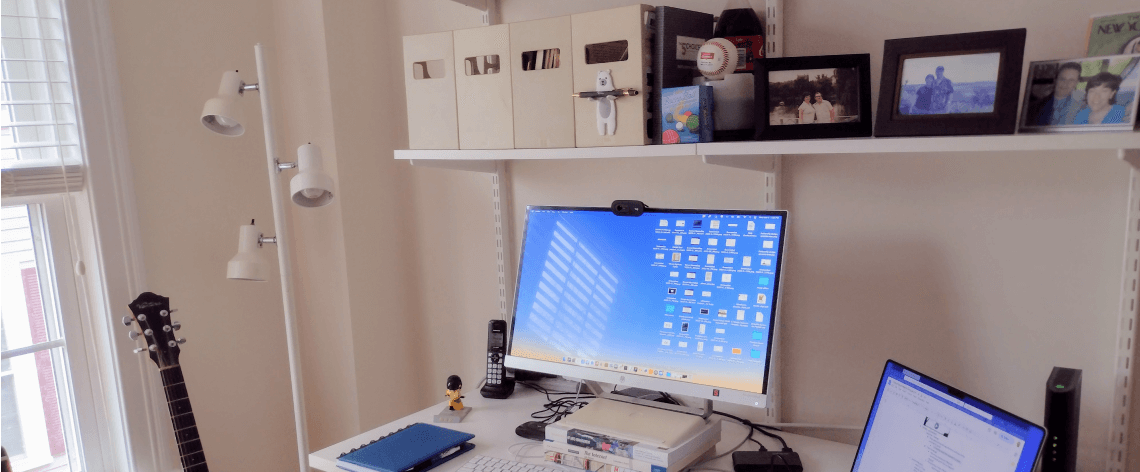

I’ve never considered myself a morning person. My ideal morning routine is to sit with a cup of coffee and ease into my day. I often find inspiration from reading articles and posts on UX that come into my inbox or across my feed.
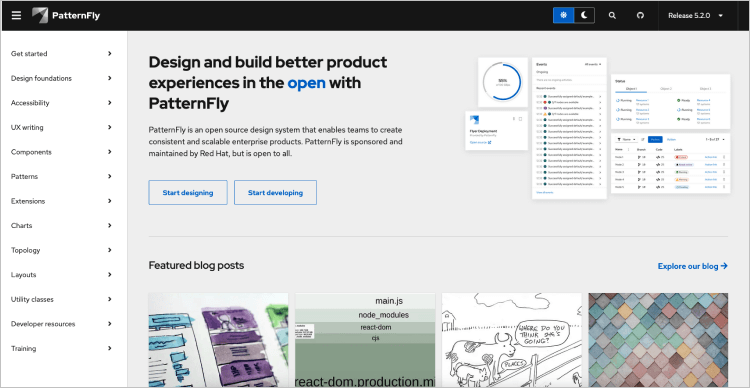
PatternFly
PatternFly is an open source design system that enables teams to create consistent and scalable enterprise products. PatternFly is sponsored and maintained by Red Hat, but is open to all. This is the homepage and navigation for Patternfly.
Prior to coming to Red Hat, I had worked for years in proprietary software companies. I was surprised and impressed with the transparency that I found at Red Hat. It’s not a culture for everyone, but it’s a great place to be a designer if you believe that optimal solutions will come from collaboration and a free and open sharing of ideas.
I’ve always felt like the best designs come out of the integration of different perspectives. I regularly seek out the input of other designers as well as non-designers in my process.

Everyone brings their own prior experiences and knowledge to the table when considering design. Developers bring knowledge about the underlying technologies that will help realize the design. Content designers are experts in the use of language. Researchers can deliver insights about those who will use the software. A support engineer will understand customer pain points. A good design will integrate all of these perspectives into a cohesive solution that delivers value for the target user.
Most of my career at Red Hat has been focused on developing systems and processes that will enable other designers and developers to create quality experiences for our customers. This includes my work on PatternFly, our open source design system for Red Hat products, and more recently in my role as part of the UXD Operations team. Having these systems in place helps Red Hatters to more efficiently deliver value-added solutions that are consistent and attuned to user needs.
As I stated earlier, I feel like open design is primarily about collaboration and inviting multiple voices and perspectives into the creative process.