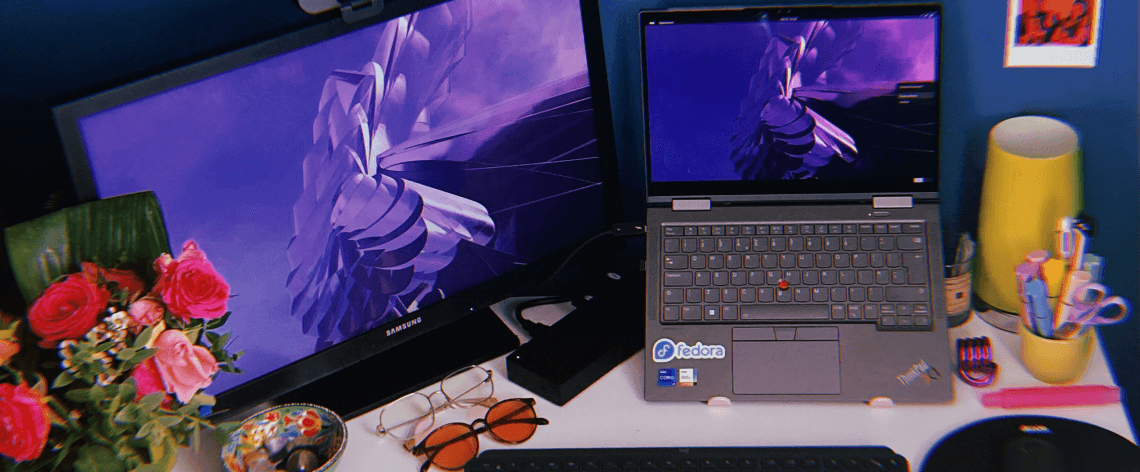
I work on a variety of different projects. These can include: event assets, graphics, user interfaces, website design, 3D rendering and more!
I always make sure I have enough time to wake-up in the morning. This usually involves a schedule made the night before. I hate rushing! I love schedules, and coffee.
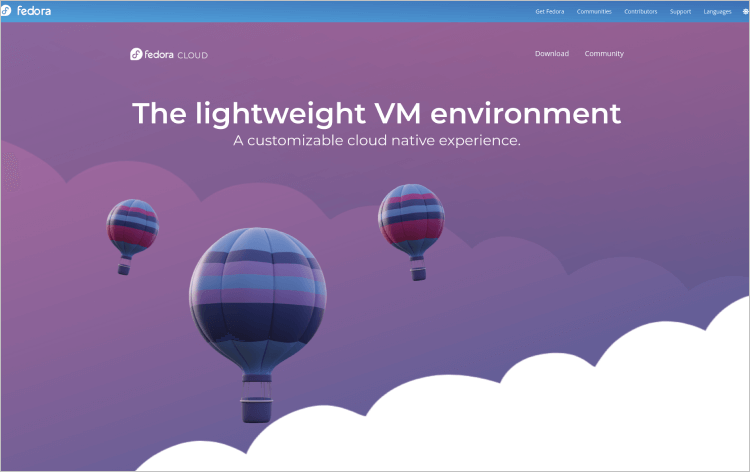
Fedora Cloud
Fedora Cloud is a community project from a group called the Cloud Working Group. This is the homepage for Fedora Cloud.
Everything is in the open! From the very beginning of a project, you are encouraged to share your work and ideas with other members of the team and community. The feedback and input you get is invaluable and motivates you beyond what you would achieve alone.
Seeing how other members of the team work and their own rituals can be a great inspiration and has often got me out of a creative block!
100% of my design toolkit is open source - this encourages collaboration and community participation as the software is accessible to everyone. If I find a new way to do something using a certain FOSS software (like Inkscape or Penpot), I am able to share it with the team and community, and vice versa. Documenting design learnings and processes ensures everyone is working from the same fountain of knowledge.
Through this, we can also create strong connections with the authors of external FOSS (Free and Open-Source Software) and their communities.

Creating a clear communication line with the team and the community is so important. With every iteration of a design, depending on who the stakeholders are, and where they reside, feedback can be solicited on the relevant platform. This can be a discussion post, mailing list, or on the ticket itself. Having that conversation and feedback loop means everyone gets their input.
Everyone is different and brings their own experiences to the table. Having unique voices and perspectives promotes creativity and new ways of thinking. You can be exposed to new skill sets you might not have even heard of before. Or incorporate a different way of looking at a problem.
I document all of my work on the respective ticket. All thoughts and insights are tracked at the time of each iteration. This allows for external inputs to be made early on. It is also useful for keeping track of why a decision was made and how I got there. This can aid a developer implementing the design to understand why a certain element has to look a certain way. It also gives guidance to any newcomers.
Upon completion, designs, and assets are uploaded to the relevant repository. This allows them to be accessed at a later date by whomever needs to. Having these files easily accessible can make the team more efficient, especially when working across timezones.
The use of FOSS helps to demolish the perceived barrier to what is possible in open design.
Open design to me means design that is accessible to all—in both the finished design and the process of how it was created. It means the sharing of knowledge and the participation within a community.
You don’t need proprietary software to make great designs!